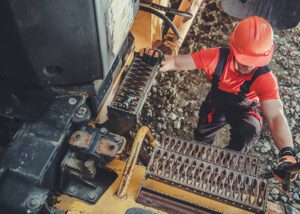
It does not have to be pristine – verdict for mining company in slip and fall incident
In Davies v Whitehaven Coal Mining Ltd [2019] NSW SC 1125, a mining company successfully defended a high quantum slip and fall claim by an underground miner.

In Davies v Whitehaven Coal Mining Ltd [2019] NSW SC 1125, a mining company successfully defended a high quantum slip and fall claim by an underground miner.

In Deanne King v Workers’ Compensation Regulator [2019] QIRC 134, the Queensland Industrial Relations Commission (QIRC) allowed a worker to lead ‘similar fact evidence’ in support of an appeal.

In this case, Mr Damon settled the claim with the defendants on the morning of trial. However, the trial proceeded to decide the apportionment between each of the defendants.

We recently reported that the second five yearly review of the Queensland Workers’ Compensation Scheme was nearing completion and that a Bill to introduce some of the review’s recommendations was expected.

In this New South Wales District Court decision, an employer was found liable for the deliberate actions of a manager who verbally and physically bullied the plaintiff over a period of 14 months.
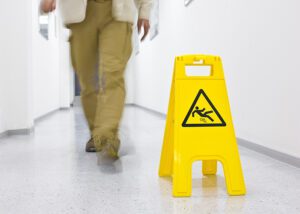
In Rhodin v Coles Supermarkets Australia Pty Ltd [2019] ACTSC 207, the ACT Supreme Court delivered a substantial verdict against Coles in favour of a delicatessen attendant following a slip and fall on ice in a seafood cool room.

In Ayre v Swan [2019] NSWCA 2020, the New South Wales Court of Appeal increased a contributory negligence finding to 80% because of the plaintiff’s grossly excessive speed.
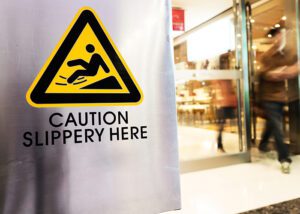
In Paul v Ashcroft Supa IGA Orange Pty Ltd [2019] NSW DC 101 (5 April 2019) an apprentice butcher in host employment was awarded $578,689 following a slip and fall on sausage mince.

In Capar v SPG Investments Pty Ltd (t/a Lidcombe Power Centre) (No 5) [2019] NSWSC 507, the New South Wales Supreme Court reinforced the principle that, except in unusual circumstances, occupiers and employers will not be liable for injuries to security guards where the injury is caused by criminals.

In Williams v Metcash Trading Ltd [2019] NSWCA 94 (3 May 2019), the New South Wales Court of Appeal unanimously overturned a verdict in favour of Metcash in a distribution centre claim brought by a picker.
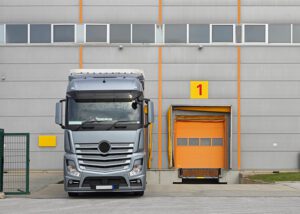
A horrific accident in the Northern Territory has given rise to a charge against Woolworths Ltd, brought by the Work Health Authority (WHA), for a breach of section 32 of the Workplace Health and Safety Act (NT).
In Carter v Hastings River Greyhound Racing Club [2019] NSWSC 780, the Supreme Court of New South Wales delivered a verdict in favour of a local greyhound racing club. The claim was made by a volunteer who was hit by a mechanical lure travelling at over 60 kilometres per hour.