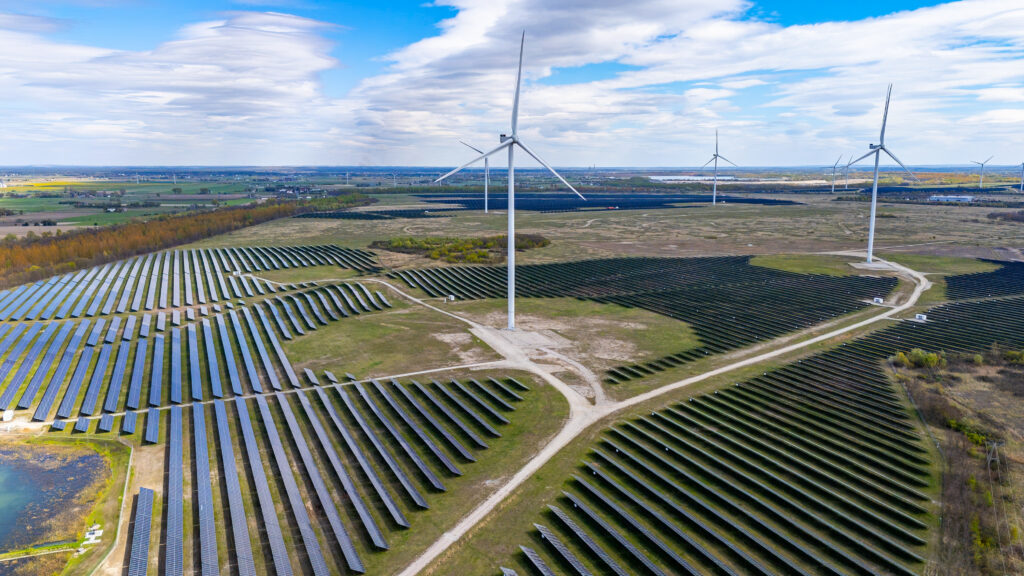
The Queensland Court of Appeal recently handed down a decision concerning the proper valuation methodology under the Land Valuation Act 2010 (LVA) to be applied to Neoen’s 500MW Western Downs Green Power Hub (Green Hub) battery storage and solar farm operation near Chinchilla in Queensland – Valuer-General, Department of Natural Resources and Mines, Manufacturing, and Regional and Rural Development v Western Downs Green Power Hub Pty Ltd [2026] QCA 118.
As with many renewables projects, the Green Hub is located on rural-zoned land that is the subject of development approvals granted for renewable energy use.
The Valuer-General had taken the position that the Green Hub land should be valued as ‘non-rural’ land, despite being located on rural-zoned land, because the development approval for the solar farm and battery storage use was for an ‘urban purpose’ (i.e. industrial in nature). On this basis, the higher ‘site value’ valuation methodology applied.
In rejecting this position, the Court of Appeal found that a declaration of ‘rural land’ under the LVA was not affected by whether it was used for an urban purpose.
Therefore, the earlier QCAT decision to declare the land rural was confirmed and the lower ‘unimproved’ valuation methodology was applied – being a difference of nearly six million dollars.
LVA’s valuation framework
Under the LVA, the Valuer-General regularly undertakes statutory valuations of land, which form the basis for various assessments, including the calculation of state land tax and local government rates and charges.
The LVA applies a different valuation method to rural and non-rural land, as follows:
- Rural land uses the ‘unimproved valuation method’, which ignores all site improvements (ie such as land clearing), typically resulting in a lower value.
- Non-rural land, being any land that is not defined as rural land, uses the ‘site valuation method’, which allows site improvements to be accounted for, typically resulting in a higher value.
Land is ‘rural land’ if it meets either of the following two tests:
1. rural zoned – at least half of the land is zoned rural under the relevant planning scheme
2. declaration criteria – upon application by the owner, the land is declared to be rural because both of the following criteria are met:
(a) 95% of the land in Queensland that is used for the same purpose is zoned rural (95% Test)
(b) the difference in valuation is material, which must be at least 30% (Materiality Test).
Importantly, even if land meets the first criteria, it will be deemed to become non-rural land if it is used for an ‘urban purpose’ under a development approval granted for a material change of use.
The Green Hub dispute
Between about 2021 and 2023, Green Hub developed its solar farm and battery storage facility on land zoned rural under the Western Downs Regional Council’s Planning Scheme and subject to material change of use development approvals.
In March 2023, the Valuer-General issued a valuation notice valuing the land at $1,050,000, using the unimproved value method applicable to rural land.
However, in July 2023, the Valuer-General changed its position and issued a new valuation notice for $6,750,000 under the site value method, on the basis that the land was non-rural as it was being used for an ‘urban purpose given that the activity is industrial in nature … ’. This represented an increase of more than 540%.
On this basis, the Valuer-General then also refused to grant an application by Green Hub for a rural land declaration (Although it did reduce its valuation for other reasons, resulting in a lower 328% difference).
Upon external review of this decision, QCAT found that the solar farm was not for an urban purpose, particularly because it was not a use typically found in a town or city, and made the declaration of rural land on the basis that both tests were otherwise met. Evidence showed that all six commercial solar farms with a BESS then in Queensland were on rural land, and that this valuation difference was material.
On appeal, the Court of Appeal rejected the Valuer-General’s primary argument that the making of a declaration was not available unless the urban purpose test was first considered, finding that a purpose of the declaration process was to avoid disputes around such an ambiguous concept and that it was therefore only subject to the two tests.
This finding resolved the issue, so the Court did not decide whether it otherwise agreed with QCAT’s position that a solar farm is not an urban purpose. It did, however, make some broad observations indicating that this issue remains open to debate due to the lack of definition in the LVA, and that it may not be able to be answered merely by asking where a use would typically occur.
Takeaways: valuation of renewables projects
Renewables proponents should consider whether, and when, a declaration of rural land can be sought, to avoid the risk of the Valuer-General taking the position that a renewables project is for an urban purpose and issuing a materially higher valuation notice.
Such a declaration application is only available if it meets both the 95% Test and the Materiality Test.
For combined solar and battery projects, the QCAT decision accepted evidence that, as at late 2025, 100% of similar projects in Queensland are on rural-zoned land. This fact may change over time as more solar farms progress towards connection and commissioning (ie become a use) in parts of Queensland that may not involve rural-zoned land, such as regional areas subject to some State Development Area schemes.
While wind farms seem likely to be in a similar position to solar farms regarding their propensity to be on rural-zoned land, standalone battery projects are more likely to be located on non-rural-zoned land.
Broader ambiguity also remains as to how variously scaled or combined renewable projects are to be categorised as having the ‘same purpose’, or not, under the 95% Test.
Where a declaration is not available, an objection to a non-rural valuation may still be made on the basis a project is not for an urban purpose, and taken to the Land Court for determination.
If you would like to know more, or require advice regarding land valuation methodology, please contact a member of our experienced planning and environment team.